
Costa Rica is an exceptional destination for wellness retreats because nature is not simply scenery here; it becomes part of the daily practice. Warm weather, tropical forests, Pacific beaches, fresh food, outdoor movement, and the country's pura vida outlook create a setting where groups can slow down and reconnect.
Why choose Costa Rica for a wellness retreat?
The Costa Rica Tourism Board describes wellness travel in the country as a combination of physical activity, healthy eating, and contact with nature. Experiences can include low-difficulty trekking, forest bathing, earthing, spa treatments, hydrotherapy, and hot springs. For retreat leaders, this creates possibilities well beyond a traditional studio schedule.
A morning practice can open into a nourishing breakfast and quiet pool time. An afternoon workshop can be followed by a beach walk, massage, forest experience, or shared meal. Costa Rica allows restorative structure and spontaneous nature to coexist.
What types of retreats work well in Costa Rica?
- Yoga and movement retreats: daily practices, mobility, meditation, breathwork, and teacher trainings.
- Therapy and personal-growth retreats: facilitated group work balanced with privacy and restorative downtime.
- Creative retreats: writing, painting, photography, music, and collaborative workshops inspired by the landscape.
- Fitness and wellbeing retreats: strength work, outdoor activity, nourishing meals, recovery, and sleep.
- Small team retreats: thoughtful planning sessions, relationship building, and space away from daily routines.
Choosing the right Costa Rica retreat venue
Look for privacy and exclusivity
Private use of a property helps the group settle into a shared rhythm. Ask whether other guests will be present, which spaces are exclusive, and whether practices or workshops can take place without interruption.
Prioritize flexible accommodation
Retreat rooms should support both comfort and practical guest matching. Beds that can be configured for couples or separated for friends and solo travelers give leaders more flexibility. Ensuite bathrooms, air conditioning, quality bedding, and quiet private rooms materially improve the experience.
Evaluate the practice space
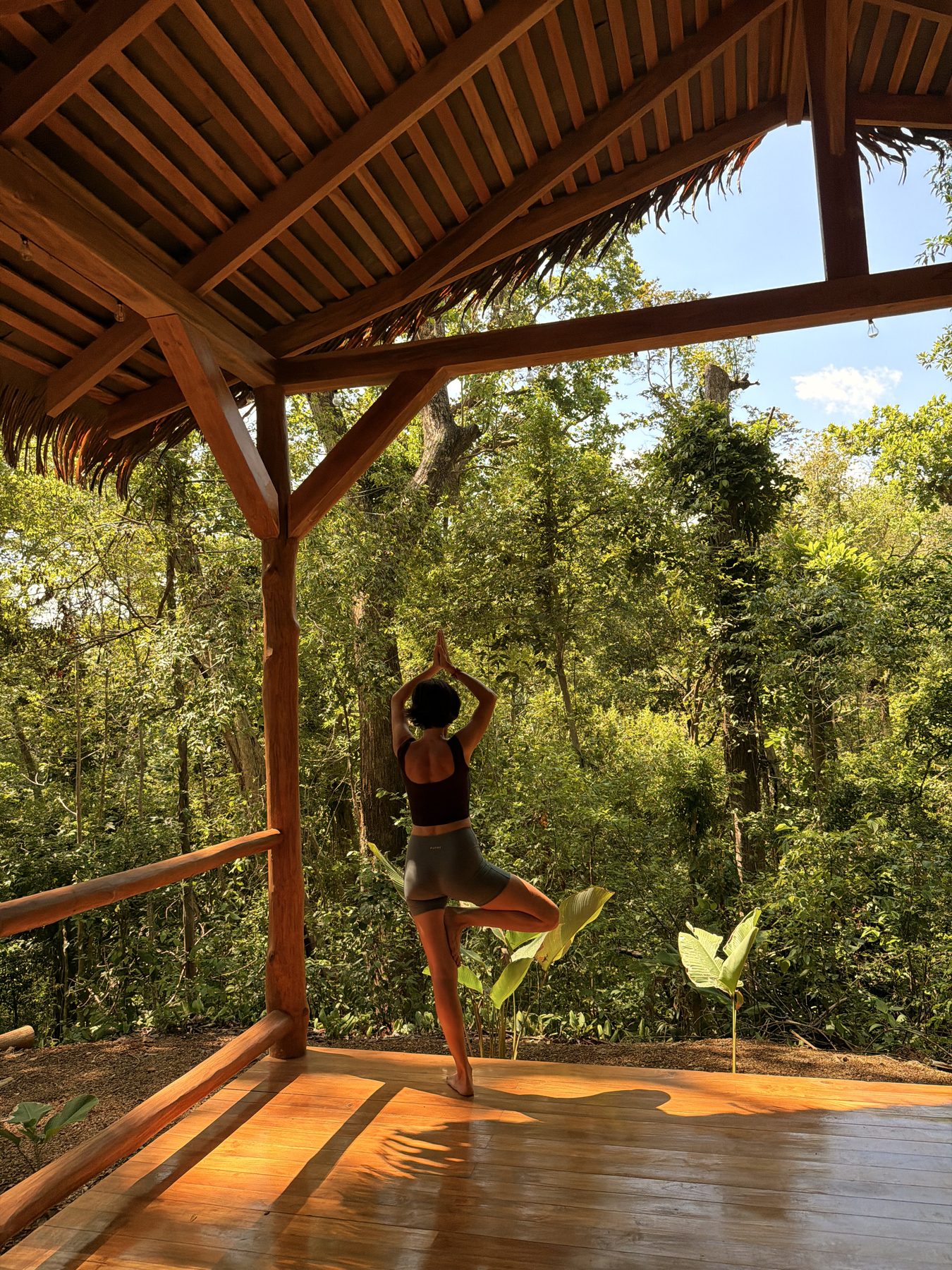
A dedicated yoga shala or workshop space should be large enough for the group and suitable for the planned programming. Electricity, nearby water or a washing station, airflow, lighting, and protection from the elements are small details that matter during a multi-day retreat.
Plan for meals and gathering
Shared food is often central to a retreat. Consider kitchen capacity, outdoor dining, chef access, dietary requirements, and whether guests can make tea or snacks independently. A retreat venue with several gathering spaces lets the group connect without making every moment feel scheduled.
Balance nature with accessibility
A remote setting can feel restorative, but retreat logistics still matter. Proximity to a beach town such as Samara gives leaders easier access to restaurants, shops, activities, and services while maintaining a sense of immersion at the venue.
A simple retreat rhythm
A good Costa Rica retreat itinerary leaves room around the programming. Consider an early movement or meditation session, breakfast, a focused workshop, a long midday pause, optional nature or beach time, and an evening gathering. Build at least one lightly programmed day into longer retreats so guests can absorb the experience.
Why the Nicoya Peninsula is especially suited to wellness travel
The Nicoya Peninsula is widely associated with longevity and is recognized as a Blue Zone. The Costa Rica Tourism Board connects the region's wellbeing with factors including calcium-rich water, healthy eating, family life, and the pura vida lifestyle. Retreat guests do not need to pursue a rigid idea of wellness here; they can experience it through connection, movement, nature, rest, and simple daily rituals.
Costa Rica retreat planning FAQs
What should a Costa Rica wellness retreat include?
Strong retreats typically combine focused programming, nourishing meals, private rest, nature, movement, and enough unstructured time for guests to reset.
Is Costa Rica good for yoga retreats?
Yes. Its warm climate, established wellness culture, natural landscapes, and range of private retreat venues make Costa Rica a popular setting for yoga and movement retreats.
How large should a retreat group be?
There is no ideal size, but intimate groups often make logistics and connection easier. Confirm sleeping arrangements, practice-space capacity, dining, transportation, and facilitator needs before setting a number.
Can a retreat venue be close to the beach and still private?
Yes. Properties outside a beach town can offer forest privacy while remaining a short drive from the coast, restaurants, and services.
Planning references
Wellness context was informed by the Costa Rica Tourism Board's wellness guide. Retreat leaders should independently confirm local providers, insurance, accessibility, transportation, and professional requirements.